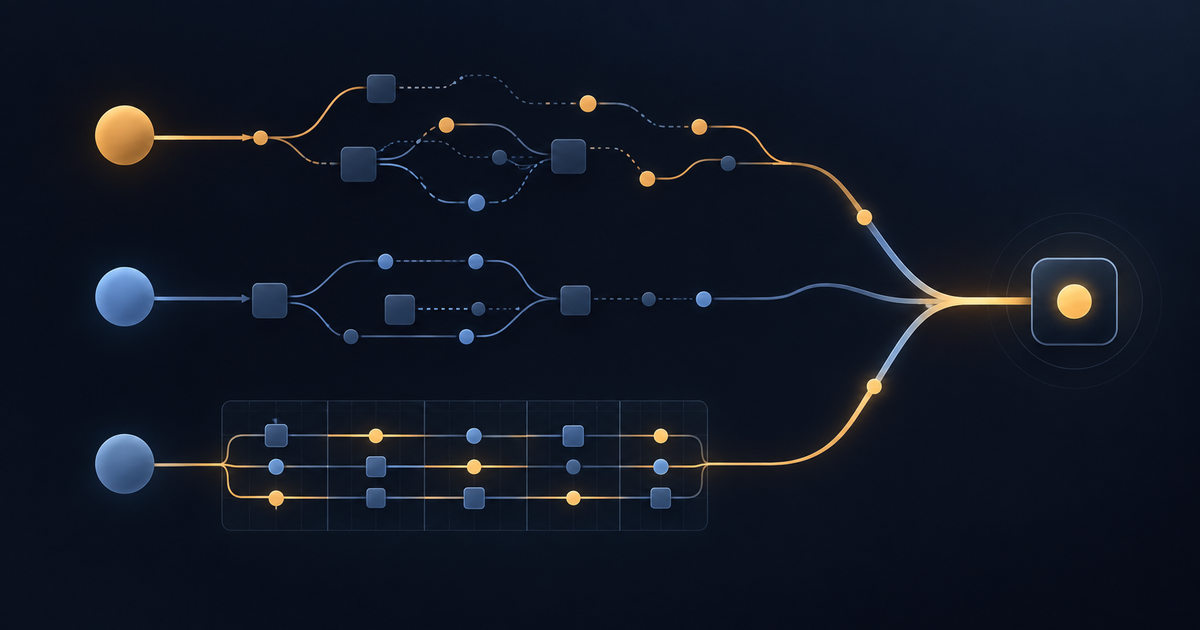
The smallest token rate is not automatically the lowest operating cost. It is one line in a larger bill.
Teams buying Chinese-model access usually choose among three paths: a direct provider account, a reseller, or a multi-provider gateway. Each path can be sensible. The wrong choice is the one made from a rate card alone.
1. Direct provider API
A direct account gives you the shortest commercial path to the model provider. For a stable, high-volume workload, it is often the cleanest way to negotiate capacity and avoid an intermediary's markup.
The hidden work appears when the portfolio grows. Every additional provider can introduce another account, payment flow, credential lifecycle, invoice format, SDK detail, support channel and incident procedure. Your team owns the adapters and the fallback logic.
Direct is a strong fit when:
- one provider handles most production traffic;
- monthly volume justifies dedicated procurement;
- the team can support provider-specific behavior;
- regional payment and contracting are already solved.
2. Reseller
A reseller solves an access or payment problem for a particular provider. That can be valuable when a direct account is impractical. The technical surface may be close to the original API, or it may introduce custom model names and billing rules.
Ask what is actually being resold. Is the route dedicated or shared? How is usage measured? Are failed requests billed? Is there a dated price table and a request-level ledger? What happens if the upstream model name changes?
A reseller is a reasonable fit when one hard-to-buy model matters more than broad switching.
3. Multi-provider gateway
A gateway standardizes access across providers. AIWave, for example, uses an OpenAI-compatible interface, one API key, USD billing and a per-request ledger for Chinese-model workloads.
The economic benefit is not merely fewer lines of client code. It is less operational branching. A team can evaluate an explicit model ID, reconcile one invoice and keep a fallback route ready without maintaining a separate commercial relationship for every experiment.
The tradeoffs are real. Gateway rates include a margin. The gateway becomes part of the availability path. Model-specific features may not map perfectly onto a common interface. You should test the exact tool, streaming and error behavior your application needs.
A cost model that includes people
Calculate token spend first:
token cost = uncached input + cached input + output
Use observed tokens from production-shaped requests and dated rates. Then add operating cost:
total cost = token cost + integration time + account operations + incident work + reconciliation + switching risk
Suppose a small team saves $30 per month by buying direct but spends two engineering hours maintaining provider adapters and another hour reconciling invoices. The token saving is real. It is also smaller than the labor cost. At much larger volume, that relationship can reverse.
There is no universal crossover point. Build yours from five inputs:
- monthly uncached input tokens;
- monthly cached input tokens;
- monthly output tokens;
- engineering and operations hours per provider;
- the business cost of a blocked payment or an untested fallback.
How to choose
Choose direct when the workload has converged. Choose a reseller when one provider is valuable but hard to purchase. Choose a gateway while model choice is still changing, payment consolidation matters, or the cost of maintaining several integrations is larger than the markup.
Then revisit the decision. A gateway can be the right way to discover the winner and the wrong way to run enormous, predictable volume forever. A direct contract can be efficient at scale and wasteful during exploration.
Questions to ask any intermediary
- Is the published rate dated, and does it separate input, cached input and output?
- Is an account-group multiplier applied after the base rate?
- Can every request be reconciled to a ledger entry?
- Are retries and failed calls visible?
- What is the route's data-retention policy?
- How quickly can the team change or disable an upstream route?
- Is there a public status signal and a documented rollback path?
The financially disciplined choice is not a logo or a category. It is the route whose full cost you can explain, verify and change without rewriting the product.
References
Test the route with your own workload
Use one key, choose an explicit model ID, and check every request against the ledger.
Run a first request